
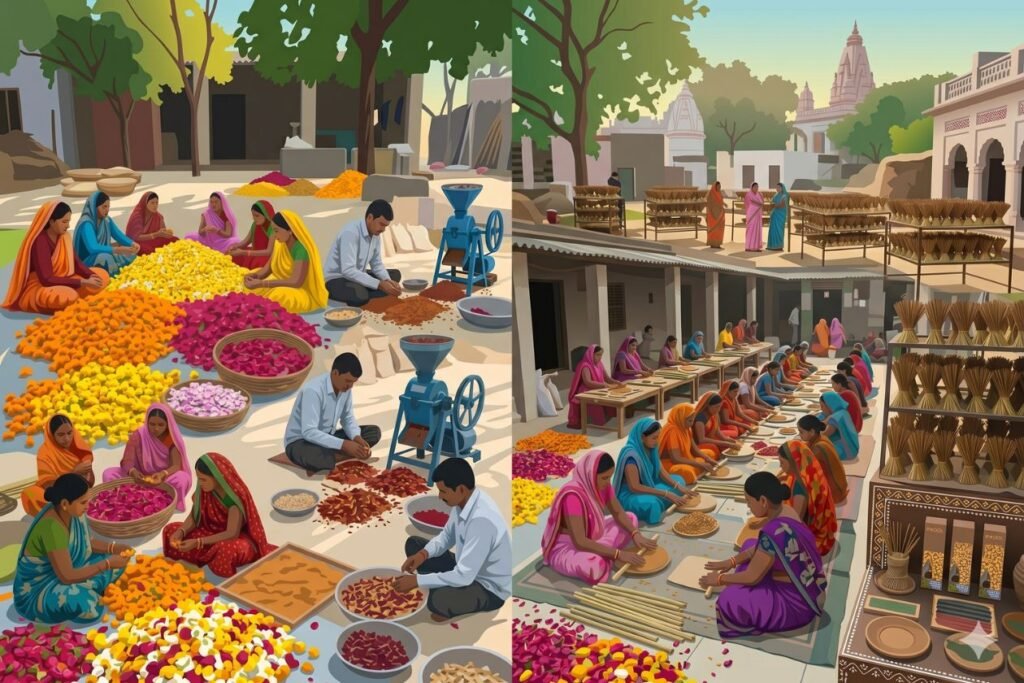
Every day, temples receive thousands of flowers offered by devotees with devotion and faith. After rituals, these sacred flowers are often discarded, which can lead to environmental waste. However, a beautiful transformation is possible — turning these holy flowers into eco-friendly products like agarbatti (incense sticks), dhoop cones, and fragrance sticks.
This process not only respects the sanctity of the offerings but also supports sustainability and creates livelihood opportunities.
Step 1: Collection of Sacred Flowers
The journey begins with the collection of flowers from temples and religious places. Volunteers and workers carefully gather used flowers from offerings and rituals.
These flowers are handled respectfully because they are considered sacred. Instead of being thrown away, they are redirected toward a meaningful recycling process.
Why this step matters:
- Prevents environmental pollution
- Preserves the sanctity of religious offerings
- Supports eco-friendly practices
Step 2: Sorting and Processing
After collection, the flowers are sorted and cleaned to remove impurities such as plastic, threads, or packaging materials. The petals are then dried and processed using machines to create fine flower powder.
This powder becomes the base material for making incense and other spiritual products.
Benefits of processing:
- Ensures hygiene and quality
- Converts waste into reusable raw material
- Reduces landfill and river pollution
Step 3: Hand-Rolling with Bamboo Sticks
The prepared flower powder is mixed with natural ingredients and carefully hand-rolled onto bamboo sticks by skilled workers.
This step often provides employment to local communities, especially women, creating sustainable livelihoods while preserving traditional craftsmanship.
Key advantages:
- Generates local employment
- Maintains traditional handcrafting methods
- Produces high-quality incense sticks
Step 4: Final Eco-Friendly Products
The recycled flowers are transformed into beautiful and useful spiritual products such as:
- Agarbatti (Incense Sticks)
- Dhoop Cones
- Fragrance Sticks
- Natural Incense Products
These products carry the essence of devotion and are environmentally responsible
Why Flower Recycling Matters for Temples and Devotees
Recycling temple flowers is more than waste management — it is a step toward sustainability, respect for faith, and social responsibility.
Environmental Impact:
- Reduces waste in rivers and landfills
- Promotes eco-friendly religious practices
- Supports a cleaner and greener environment
Social Impact:
- Creates job opportunities for local communities
- Encourages responsible temple management
- Supports sustainable livelihoods
Devdisha’s Vision for Sustainable Devotion
As Devdisha continues to connect devotees with divine experiences, initiatives like flower recycling align perfectly with the mission of responsible and eco-conscious spirituality.
By supporting recycled flower products, temples and devotees can:
- Honor sacred offerings respectfully
- Protect the environment
- Contribute to a sustainable future


I love a good deep clean and organize. Looking forward to reading your tips and tricks!